
Powering the Future: Renewable Energy Investing for Energy Security and Resilience


Energy Transition Investing to Support Increased Electricity Demand with Sustainable Power
By Kofi Kodua, Managing Director & Portfolio Manager
Growing energy demand, accelerating electrification, increasing focus on energy security, and technological innovation are reshaping how we think about renewable energy and its role in the global economy. As someone who has driven an electric vehicle for the better part of a decade, and whose household today relies exclusively on electric vehicles, I have become far less dependent on gasoline than I once was. Yet I still find myself glancing at gas station signs as I drive by, especially during these periods of geopolitical uncertainty and rising energy prices. Recent volatility in global energy markets serves as a reminder that energy touches nearly every aspect of our daily lives, whether we are filling up a gas tank, charging a vehicle, heating our homes, or powering the digital infrastructure that increasingly connects our world.
These experiences also highlight a broader shift underway. In addition to concerns about climate change, the conversation about renewable energy today also focuses on questions of energy security, economic competitiveness, infrastructure resilience, and meeting the growing demand for electricity across our economy. The electrification of transportation, manufacturing, and buildings alongside the growing adoption of AI and the increasing data center electricity demand require additional, reliable sources of electricity.
Together, these trends highlight a reality many investors have long recognized: Renewable energy is no longer simply an environmental solution. Despite the political headwinds at the federal level and the impact on the investment landscape as we previously wrote about, renewable energy is becoming essential infrastructure for the modern economy. The global energy transition continues to move forward despite changing political priorities, market volatility, and regulatory uncertainty. Costs for solar power, battery storage, and other renewable technologies have fallen dramatically over the past decade, making them increasingly competitive with conventional energy sources.
As demand for electricity grows, renewable energy is positioned to play a critical role in helping meet future energy needs while reducing greenhouse gas emissions.
Renewable energy represents more than an investment opportunity. It is an opportunity to support the infrastructure, communities, and innovations that will help shape a more resilient and sustainable future.
Here, we look at the expected electricity demand growth in the coming years and how renewable energy investing and the patient capital invested through Clean Yield are being deployed to help build a resilient, secure energy future.

Stay up to date with the impact investing landscape with our newsletter.
Clean Yield uses the power of investment and markets to help our clients achieve their financial goals and move society toward a more just and sustainable future. Discover more about our work, the change we seek, and our efforts to make a positive impact.
Electricity Demand Growth: Artificial Intelligence Energy Consumption
Artificial intelligence is quickly becoming one of the most significant drivers of electricity demand in decades. Training and operating advanced AI models requires immense computing power. The data centers that support these technologies operate around the clock, consuming large amounts of electricity to power servers and cooling systems. As companies continue investing billions of dollars into AI infrastructure, utilities and grid operators are increasingly evaluating how to meet future demand.
This growing demand presents an important challenge: How can society support technological innovation while managing the environmental impact of increased energy consumption?
Renewable energy is expected to be part of the answer. Many technology companies have become some of the world’s largest purchasers of renewable energy, signing long-term agreements for solar and wind power to support their operations. At the same time, investments in battery storage, grid modernization, and energy efficiency are helping create a more flexible and resilient energy system capable of supporting growing demand.
This emerging dynamic highlights an important point: Energy transition is no longer driven solely by climate goals. Increasingly, it is also being driven by economic necessity. Whether powering electric vehicles, manufacturing facilities, homes, businesses, or AI data centers, the world will require significantly more electricity in the years ahead, creating long-term demand for renewable energy infrastructure and related investments.
Renewable Energy Investing for Energy Security and Resilience
While climate change remains one of the primary motivations behind the transition to renewable energy, again, it is no longer the only one. Increasingly, energy security and resilience are becoming important drivers of investment and policy decisions around the world. Recent disruptions in global energy markets have highlighted the vulnerabilities that can accompany dependence on concentrated supplies of fossil fuels. Geopolitical conflicts, supply chain disruptions, and price volatility can have significant impacts on energy costs for households, businesses, and entire economies. These events serve as reminders of the importance of maintaining a diverse and resilient energy system, and perhaps more importantly, accelerating the shift from our reliance on fossil fuels to alternative sources of energy.
Renewable energy can play an important role in strengthening that resilience. Unlike traditional fossil fuels that must often be extracted, transported, and traded through complex global supply chains, renewable energy resources such as solar and wind are locally available in many regions.
When combined with battery storage, modern transmission infrastructure, and distributed energy systems, renewable energy can help diversify energy sources and reduce exposure to external disruptions.
Additionally, renewable energy has evolved far beyond its early role as an alternative energy source. Utilities and policymakers are increasingly focused on modernizing aging grid infrastructure. As renewable energy adoption expands and electricity demand grows, investments in transmission systems, energy storage, and grid resiliency will become increasingly important. Today, it is increasingly becoming a foundational component of modern infrastructure.
This evolving dynamic reinforces the long-term relevance of renewable energy investments. These investments are not only helping address climate-related challenges, they are also supporting the development of energy systems that can be more reliable, resilient, and adaptable in an increasingly uncertain world. It is a long-term transformation of how energy is produced, distributed, and consumed.
Patient Capital Supporting the Renewable Energy Transition
Large-scale energy transitions do not happen overnight. Building new energy infrastructure requires substantial upfront investment, long planning horizons, and a willingness to focus on outcomes that may take years to fully materialize. In many ways, renewable energy shares characteristics with other impact investments that benefit from the patient capital we are all so familiar with.
Projects often require significant investment before generating returns. Communities may experience benefits gradually through lower energy costs, improved air quality, local job creation, and greater energy resilience. The environmental impacts, including reduced carbon emissions, may unfold over decades.
For us as investors, who take a long-term perspective, these characteristics align naturally with our impact investing approach. Rather than focusing solely on short-term market fluctuations, the patient capital Clean Yield clients provide support projects and enterprises working toward durable environmental and social outcomes. Energy transition is not a quarterly story. It is a generational one.
Investing Across the Energy Transition Spectrum
The transition to a more resilient energy system creates opportunities across multiple types of investments. From community-based lending and project finance to publicly traded companies helping build the infrastructure needed for a lower-carbon economy. Within Clean Yield’s impact investing platform, investments such as Sunwealth and Coastal Enterprises, Inc., help expand access to renewable energy and energy-efficiency solutions in communities that may otherwise face barriers to financing.
These investments demonstrate how community capital can support local economic development while advancing environmental goals.
Energy transition is also reflected within portions of our public equity portfolios. Companies such as First Solar, Ameresco, and HA Sustainable Infrastructure Capital illustrate different ways investors can participate in the growth of renewable energy and sustainable infrastructure. First Solar manufactures advanced solar modules that help expand renewable electricity generation. Ameresco develops and implements energy-efficiency, renewable energy, and energy infrastructure projects that help organizations reduce energy consumption and improve resilience. HA Sustainable Infrastructure Capital provides financing solutions for renewable energy, energy efficiency, and other sustainable infrastructure projects, helping deploy capital to areas critical to energy transition.
While these companies operate in different segments of the market, they share a common theme: supporting the infrastructure, innovation, and capital formation needed to build a more sustainable and resilient energy system.
Looking Beyond Electricity Generation
As renewable energy continues to mature, new opportunities are emerging throughout the broader energy ecosystem. Battery storage is helping improve grid reliability and flexibility. Energy-efficiency technologies continue to reduce energy consumption across homes and businesses. Electrification initiatives are transforming transportation and building systems.
New technologies are also emerging to support grid management, demand response, and distributed energy resources.
While AI is contributing to growing energy consumption, it may also help create smarter and more efficient energy systems. For us at Clean Yield, these developments reinforce the importance of looking beyond individual technologies as investment opportunities and considering the broader systems needed to support a more sustainable future.
A Long-Term Perspective on Renewable Energy
Renewable energy has experienced periods of rapid growth, policy support, market volatility, and regulatory uncertainty. Yet the broader direction of travel remains clear. As energy demand grows and economies seek cleaner, more resilient sources of power, renewable energy will continue to play an increasingly important role. Impact investing encourages us to look beyond short-term headlines and focus on long-term outcomes. Renewable energy exemplifies that approach. The transition may not always follow a straight path, but the need for affordable, reliable, and sustainable energy remains.
At Clean Yield, we continue to seek opportunities where environmental stewardship, community impact, and responsible investing intersect. Through investments that support renewable energy development, community resilience, and long-term climate solutions, we believe our clients can play an important role in helping build the energy systems of the future. As we look ahead, renewable energy remains more than a technology story or a policy discussion. It is a story about resilience, innovation, communities, and the power of long-term thinking. The growing demand for reliable, affordable, and resilient energy, driven by electrification, technological innovation, economic development, and evolving energy security needs, only reinforces the importance of investing in the infrastructure that will power the future.
If you’d like to learn more about how renewable energy and energy resilience fit within our broader impact investing strategy, we welcome the conversation.
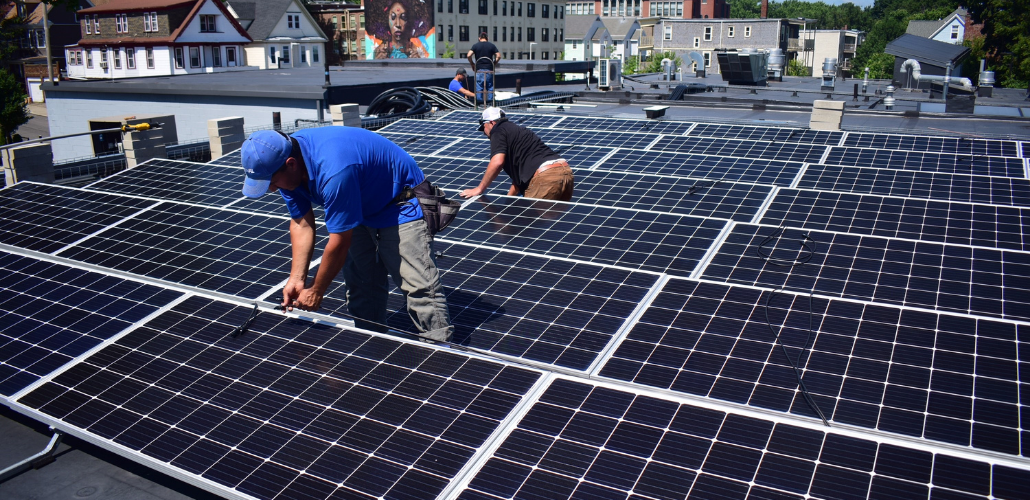
Photo of Sunwealth’s project at Commonwealth Kitchen, courtesy of Sunwealth
Kofi Kodua oversees Clean Yield’s impact investing strategy, co-leads the firm’s equity research efforts, and manages client portfolios. His background spans deep expertise across both public and private markets, bringing nearly two decades of experience in investment research, portfolio management, and ESG integration. Prior to joining Clean Yield, Kofi spent 12 years at Allianz Global Investors as a research analyst and senior portfolio manager, where he oversaw three public equity ESG funds and helped build the firm’s Global Thematic Equity platform.
More News & Insights

Speaker Series — Revitalizing Local News: How to Support Reporting that Makes Communities Stronger
Independent local journalism is essential to a functioning democracy. Join this webinar to learn how we can support stronger communities through revitalizing local independent newsrooms.

How to Align Philanthropy and Donations with Your Financial Goals
Charitable giving from your investment portfolio could be a smart way for you to support the charities and causes you care about.

Q3 2026 Market Outlook: Weathering the Interest Rate Storm
Our team’s reflections on Q3 2026 and what to expect in the coming months from the market, inflation, bonds, investing, and more.
