
How to Prevent Identity Theft and Fraud: Steps You Can Take


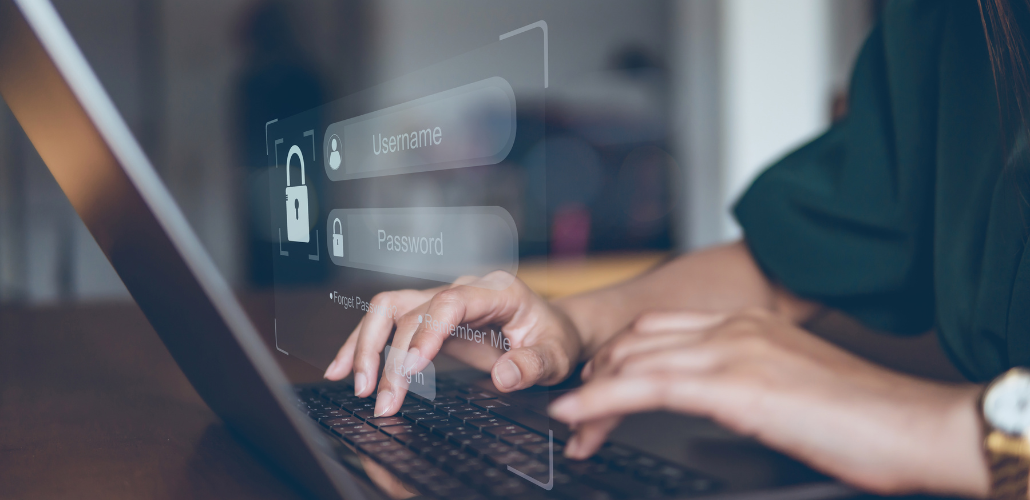
Follow Our Fraud-Prevention Checklist to Protect You and Your Family From Fraud
By Elizabeth R. Levy and Dorigen Hofmann
Every year, about one-third of Americans experience financial scams, fraud schemes, and identity theft. Instances of fraud have surged in the last five years, increasingly targeting individual investors, small business owners, and older adults. This fact led us at Clean Yield to host a webinar on Fraud Prevention Strategies, which provided information about what fraud schemes are, how to identify different types of fraud, and several fraud prevention strategies from three expert panelists.
“A lot of people don’t want to talk about frauds and scams, particularly if they’ve been a victim of a fraud or a scam. And, it’s also challenging because it has such a significant impact on people… truly anybody can be a victim of financial fraud.” — Mike Pieciak, Vermont State Treasurer
In addition to the ongoing vigilance, skepticism, and regular reviews recommended by our panelists, we have compiled steps that you can take action on now to better protect you and your family from instances of fraud:
- Freeze your credit and freeze your minor children’s credit.
- Establish your online Social Security Account.
- Add a Trusted Contact to your investment account.
- Be fraud-aware and follow cybersecurity best practices.
- Take action should you become a victim of a fraud scheme or identity theft.
Download Clean Yield’s free Fraud Prevention Checklist for an actionable list of steps you can take to prevent fraud and identity theft.
1. How to Secure Your Identity and Freeze Your Credit
The first step to preventing identity theft is securing your identity and your credit—and your children’s credit. Freezing credit and then unfreezing it when you want changes to be made is relatively easy and can save a lot of time and trouble in the long run. It is a free service that the credit bureaus are required to provide, and it does not affect your credit scores or already opened accounts or loans. When credit is frozen, your credit report is frozen so no accounts or loans can be opened in your name by you or anyone else. You might also hear about a credit lock, which is similar, but more flexible than a freeze — and is generally a paid service.
Review Credit Reports
First, review your credit report to ensure it is accurate. You can access your three credit reports at the Annual Credit Report website, where you can also request weekly credit reports.
If you find information that isn’t correct, you can start by contacting the credit reporting company and company that issued the wrong information. The Consumer Financial Protection Bureau has more information on what to look for on your credit report.
Freeze Your and Your Minor Children’s Credit
To freeze your credit, you must reach out to each of the three credit services by visiting their website: Equifax, Experian, and TransUnion.
“A newborn baby’s credit profile is worth more on the dark web than a middle-aged millionaire’s because there’s just a longer time to use it for nefarious purposes.” — Aoife Ridge, Director, Advisor Service Fraud Prevention, Charles Schwab
Once you’ve frozen your credit, make sure you freeze your children’s credit as well! If your children are older than 18, ensure they follow the steps above to freeze their credit. The direct links to information about freezing children’s credit for each service are: Equifax, Experian, and TransUnion. You will need to have copies of documentation for you and your kids, like birth certificates and driver’s licenses and you will need to mail them. This step is not as quick but still important.
When you need your credit unfrozen, such as when you are applying for a credit card or mortgage, you will go back to the same three credit services’ websites. Unfreeze requests made online or by phone are required to be implemented within one hour.
2. How to Create Your Social Security Account Online
The idea of setting up an online Social Security Account before you need it might seem risky, but it’s actually riskier not to — if you don’t set an account up, someone else might, using your information. The best practice is for everyone 18 and older to set up their account at the Social Security Administration website. You will need a government ID, like a driver’s license or passport, to set up the account, and the government has a video to walk you through how to choose which of the two available types of login methods is best for you.
(Login.gov is a government-run service only used for government programs, while ID.me is a private company, so can be used for other identifications as well.)
3. How to Add a Trusted Contact to Your Investment Account
One tool that financial institutions are using to help prevent fraud is the use of a “trusted contact person.” As the Securities and Exchange Commission (SEC) explains: “A ‘trusted contact person’ is like an emergency contact — a person you authorize your brokerage firm to contact in limited circumstances, such as if your investment professional has trouble reaching you or has a reasonable belief that your account might be exposed to possible financial exploitation.”
FINRA, a regulatory organization under the SEC, explains that naming a trusted contact “does not give that person authority to make decisions about your account or execute transactions, and does not make that person a power of attorney, legal guardian, trustee or executor… A trusted contact is simply someone who can help your firm help you, if needed.”
Many of Clean Yield’s client accounts held at Schwab already have established Trusted Contacts. If you’re not sure if you have one, reach out to us, and we can find out! You can review more information about Trusted Contacts at Schwab here.
Download Clean Yield’s free Fraud Prevention Checklist for an actionable list of steps you can take to prevent fraud and identity theft.
4. How to Be Fraud-Aware: Additional Cybersecurity Steps and Best Practices
Follow these additional best practices:
- Use strong passwords, and consider a password manager for all online accounts
- Use multi-factor authentication for all online accounts
- When possible, avoid mailing checks. Use a credit card or, when possible, use electronic/ACH transfers directly from your bank account
- If you must write checks, do it from an account with a lower balance, rather than a savings or brokerage account
- Rip up all old or deposited checks when done with them
- When doing a wire transfer, make sure to confirm the details with a person. If you request a wire transfer from Clean Yield, expect a phone call!
Learn to Recognize Fraud
It is helpful to think about the two main types of fraud—unauthorized and authorized. Unauthorized fraud is where the owner of the account or assets did not authorize a payment, like identity theft. Authorized fraud, though, is where a fraudster manipulates an individual to send them a payment under false pretenses.
“There are three things that I think sort of present themselves routinely when someone is trying to defraud somebody or scam them … Often, these three things are put together: The sense of urgency, the fact that there’s no risk, the fact that there are guaranteed returns. It’s a very, very common sort of puzzle that they put together to try to perpetrate a fraud, and one that we should all be mindful of.” — Mike Pieciak, Vermont State Treasurer.
Common Fraud Warning Signs
- Urgency or secrecy
- Claiming of authority, without verification
- An investment with guaranteed returns
- An investment with no risk
Be Skeptical Of:
- Phone calls from numbers you don’t know — let them go to voicemail.
- Any institution reaching out to you — it’s safest to call back to a number you know and verify if it was real. For example, if you receive a call from someone stating they are from your bank, from the Social Security Administration, or from the IRS, call the institution at a number you know is a real number. Don’t give out any information unless you are sure you are talking to the real organization — and legit organizations won’t ask for your Social Security Number, your bank account number, or your online password if they call you.
- Any message referring to a product, service, request, or incident you are not aware of or didn’t ask for.
- An email from an address that is close to, but not exactly, like others from a legitimate organization. Always look at the full address, and don’t click on links or open attachments unless you are sure it’s legit—it’s always safer to go directly to a website rather than access the information via links you have been sent.
More Resources on Recognizing a Scam
- U.S. Federal Reserve Bank: Scam Detection for Individuals
- U.K. Government: Stop! Think Fraud
5. How to Deal with Identity Theft or Fraud
With the help of Schwab, we put together a handout of what to do in case of fraud or identity theft, broken out by when to take different steps.
The short version is that in the case of identity theft, the first steps are:
- Let your financial advisor (like us at Clean Yield) know.
- Let whoever custodies your accounts (like Schwab) know.
- Let the Social Security Administration know.
Run reputable anti-virus/anti-malware/anti-spyware software to clean your computer. Once you’ve ensured your computer is virus/malware/spyware free, you should change passwords on your accounts. Make each password unique, long, and strong, and use two-factor authentication when available.
Other Resources to Report and Handle Instances of Fraud
- Internet Crime Report Center (IC3)
- FBI Report Fraud
- FTC Report Fraud
- AARP Fraud Hotline
- National Elder Fraud Hotline
Download Clean Yield’s free Fraud Prevention Checklist for an actionable list of steps you can take to prevent fraud and identity theft.
Liz Levy is responsible for researching publicly traded equities and managing client portfolios, having joined Clean Yield in June 2024. She brings more than 20 years of experience in Sustainable Investing. She is a Chartered Financial Analyst and is passionate about aligning investment portfolios with values, with deep experience in managing divested, fossil fuel-free, and clean energy investments.
Dorigen Hofmann is a Partner and Portfolio Manager who is also responsible for the firm’s compliance and operations functions. Immediately prior to joining Clean Yield in 2006, Dorigen was an assistant attorney general for the state of Washington. The daughter of co-founder Rian Fried, Dorigen has more than 30 years of experience with Clean Yield.
More News & Insights
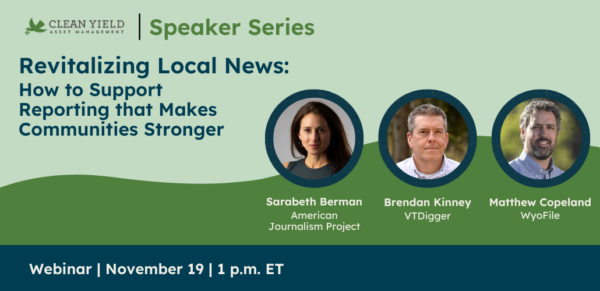
Speaker Series — Revitalizing Local News: How to Support Reporting that Makes Communities Stronger
Independent local journalism is essential to a functioning democracy. Join this webinar to learn how we can support stronger communities through revitalizing local independent newsrooms.

How to Align Philanthropy and Donations with Your Financial Goals
Charitable giving from your investment portfolio could be a smart way for you to support the charities and causes you care about.
Q3 2026 Market Outlook: Weathering the Interest Rate Storm
Our team’s reflections on Q3 2026 and what to expect in the coming months from the market, inflation, bonds, investing, and more.
