
Growing Multigenerational Value: Investing in Forests for a Sustainable Future


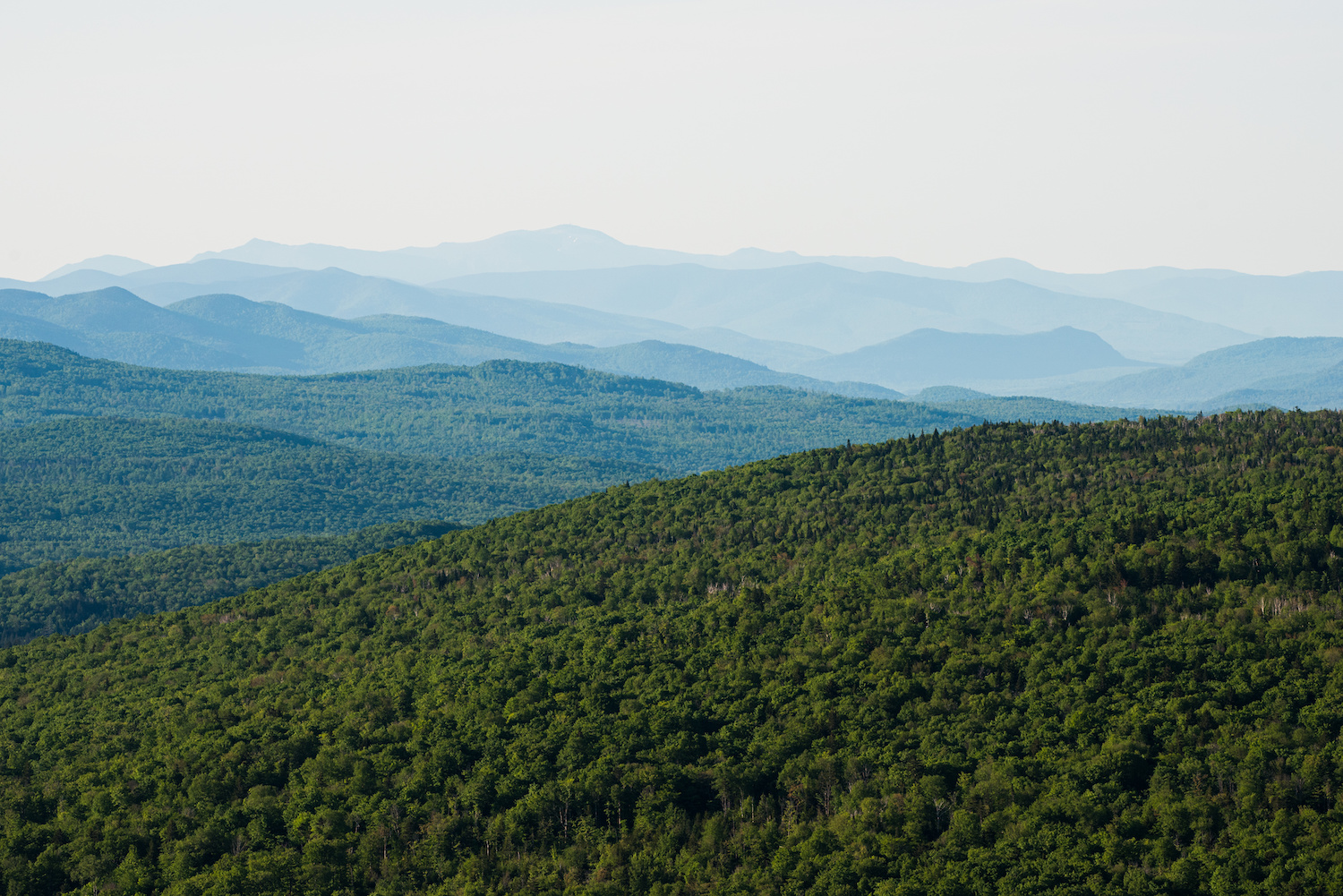
An Earth Month Reflection on Investments in Climate Change Solutions
By Kofi Kodua, Managing Director & Portfolio Manager
When we think about climate change solutions, we often picture wind turbines, solar panels, or electric vehicles. But one of the most powerful tools we have has been growing quietly for millennia: forests.
Forests absorb carbon from the atmosphere, protect drinking water, stabilize soil, and provide habitat for wildlife. In the United States, forests serve as one of the country’s largest natural carbon sinks — offsetting a little more than 10% of annual greenhouse gas emissions, according to the U.S. Environmental Protection Agency. At the same time, deforestation globally is a major environmental hazard. When forests are cleared or burned, the carbon stored in trees is released back into the atmosphere, and the forests’ future carbon-absorbing capacity is lost.
This Earth Month, we’re taking a moment to reflect on what it means to make investments in climate change solutions that last for generations. When we invest in forests, not simply as land or timber, but as living systems that require care, patience, and long-term thinking, the resilient benefits can echo into the future.
Sustainable Forestry and Patient Capital: Playing the Long Game
At its core, sustainable forestry is about balance.
It means harvesting timber responsibly so forests can regenerate. It means protecting biodiversity and waterways. And it means making decisions based on what will keep a forest healthy for decades from now, not just what produces the highest yield today.
For long-term investors, resilience matters: Healthy forests are not only environmentally beneficial, they are a more durable and stable asset over time.
Forests don’t operate on quarterly timelines. Trees grow slowly. Ecosystems evolve gradually. And good forest management often requires restraint — sometimes choosing what not to cut.
That’s why sustainable forestry pairs naturally with patient capital. Both require a long view. Returns — environmental and financial— tend to unfold steadily over time.
What does it look like when patient capital is effectively deployed in sustainable forestry? Take a look at two examples from Clean Yield’s impact investments, Lyme Timber and the Vermont Community Loan Fund.
Lyme Timber: Long-Term Ownership, Long-Term Stewardship
Lyme Timber focuses on owning and managing working forests across the United States with a long-term mindset. Their approach combines sustainable harvesting with conservation and ecosystem services, helping ensure forests remain productive while also protected from development pressures. In many cases, land is permanently conserved through conservation easements while remaining economically viable as working forests from which lumber is sustainably harvested. That balance is important. It shows that conservation and economic performance don’t have to be opposing goals.
For us at Clean Yield, that alignment matters. When our clients invest in Lyme Timber, forests are thoughtfully and strategically managed with a long-term mindset to generate income while preserving ecological integrity for future generations.
Vermont Community Loan Fund: Investing in Vermont’s Working Landscape
Sustainable forestry also happens at the community level. Through the Vermont Community Loan Fund’s Food, Farms & Forests Fund, capital supports farmers, food producers, forestry enterprises, and natural resource-based businesses throughout Vermont. These are often small and mid-sized operations that may not have easy access to traditional financing but are essential to maintaining working lands and vibrant rural communities.
By supporting this fund, our clients help strengthen regional food systems, preserve working lands, and maintain forests as productive, community-centered resources. It’s a powerful example of how community investing and environmental stewardship intersect – where sustainability and economic opportunity move forward together.

Stay up the date with the impact investing landscape with our newsletter.
We integrate a company’s environmental, social, and governance (ESG) profile into our analysis of its financial prospects and stock valuation. We are always looking for ways to maximize the positive impact our clients’ assets can make in the world, whether through proxy voting, shareholder activism, or impact investing.
The Multigenerational Benefits of Investing in Sustainable Forestry Go Beyond Carbon
While investing in climate change solutions by investing in long-term forestry management is crucial, the power of patient capital invested in forest stewardship goes even further.
Supporting Rural Economies: Forests are deeply tied to rural livelihoods. Responsible forest management supports jobs in logging, milling, transportation, and local processing. It sustains supply chains that depend on working forests. And when forests remain forests, rather than being sold for development, communities retain both economic opportunity and their connection to the land.
Investments in sustainable forestry, therefore, extend beyond environmental outcomes. They help sustain rural economies and preserve regional character. For Clean Yield, this intersection of environmental health and community vitality is central to how we define impact.
Forests as Climate Infrastructure and Resilience. Forests do more than store carbon. In many ways, they function as natural infrastructure. Healthy forests help regulate water systems, reduce erosion, filter drinking water, and moderate temperatures. They can reduce flood risk by absorbing rainfall and stabilizing soil, benefits that would otherwise require expensive built infrastructure.
At the same time, forests themselves are under pressure. Drought, invasive pests, and increasingly severe wildfires are reshaping landscapes across North America. Climate change is not only something forests help mitigate; it’s something they must endure. Well-managed forests tend to be more resilient. Practices like selective harvesting, maintaining species diversity, and active stewardship can reduce vulnerability to fire and disease. In contrast, poorly managed forests may become more susceptible to stress and catastrophic loss.
For long-term investors, resilience matters: Healthy forests are not only environmentally beneficial, they are a more durable and stable asset over time. Investing in sustainable forestry is meant to ensure long-term timber production alongside supporting living systems that provide climate protection, risk mitigation, and long-term stability.
A Multigenerational Perspective
Forestry is inherently intergenerational. Decisions made today will shape landscapes decades from now. Trees planted this year may not reach maturity for a generation. The way land is managed now will influence soil health, biodiversity, and carbon storage long into the future.
Impact investing shares that same perspective. It asks us to look beyond immediate returns and consider the long-term systems we are helping build and preserve. Sustainable forestry reminds us that responsible investing is not only about what we earn. It’s also about what we leave behind.
Earth Month invites us to reflect on the alignment between our values and our capital.
Sustainable forestry offers a clear example of how patient capital when thoughtfully invested can contribute to climate resilience, biodiversity protection, and rural economic stability while maintaining financial discipline.
At Clean Yield, we remain committed to identifying opportunities where environmental stewardship and responsible investing go hand in hand. Through investments in sustainable timber management and community-based working landscape funds, we aim to support ecosystems and communities together.
If you’d like to learn more about how sustainable forestry fits within our broader impact investing strategy, we welcome the conversation.
Kofi Kodua oversees Clean Yield’s impact investing strategy, co-leads the firm’s equity research efforts, and manages client portfolios. His background spans deep expertise across both public and private markets, bringing nearly two decades of experience in investment research, portfolio management, and ESG integration. Prior to joining Clean Yield, Kofi spent 12 years at Allianz Global Investors as a research analyst and senior portfolio manager, where he oversaw three public equity ESG funds and helped build the firm’s Global Thematic Equity platform.
More News & Insights
How Shareholder Advocacy and Proxy Voting Can Drive Meaningful Change — and How You Can Help Protect It
For social investors, shareholder advocacy provides a powerful mechanism to push companies toward responsible practices and help shape industry-wide standards.
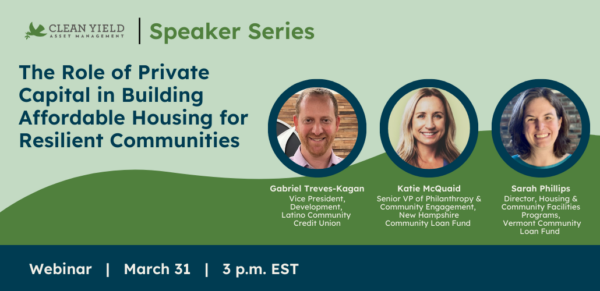
Upcoming Speaker Series: The Role of Private Capital in Building Affordable Housing for Resilient Communities
We invite you to join us on March 31 at 3 p.m. ET to participate in this critical conversation on affordable housing.

Proxy Voting: A Critical Tool for Individuals and Investors to Influence Corporate Behavior
Learn how proxy voting gives equity (stock) investors a powerful tool to pressure corporations to act more responsibly.